Mt. Whitney Ascent
7-Day Guided, Mule-Assisted Trek
Adventure Elevated
August 7 - 13, 2027
$4,095
7-Day Pack-Supported Adventure to the Highest Peak in the Lower 48
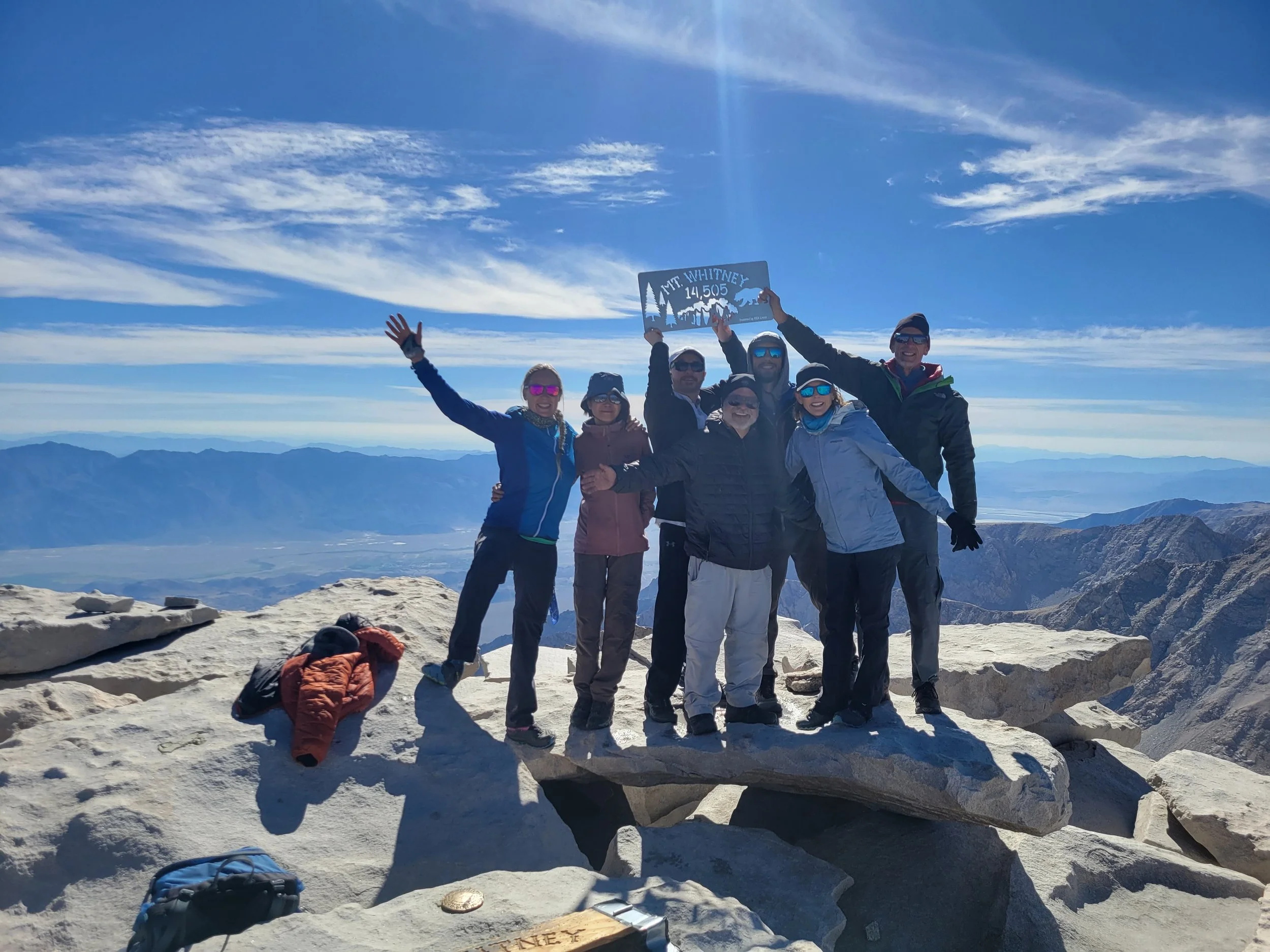
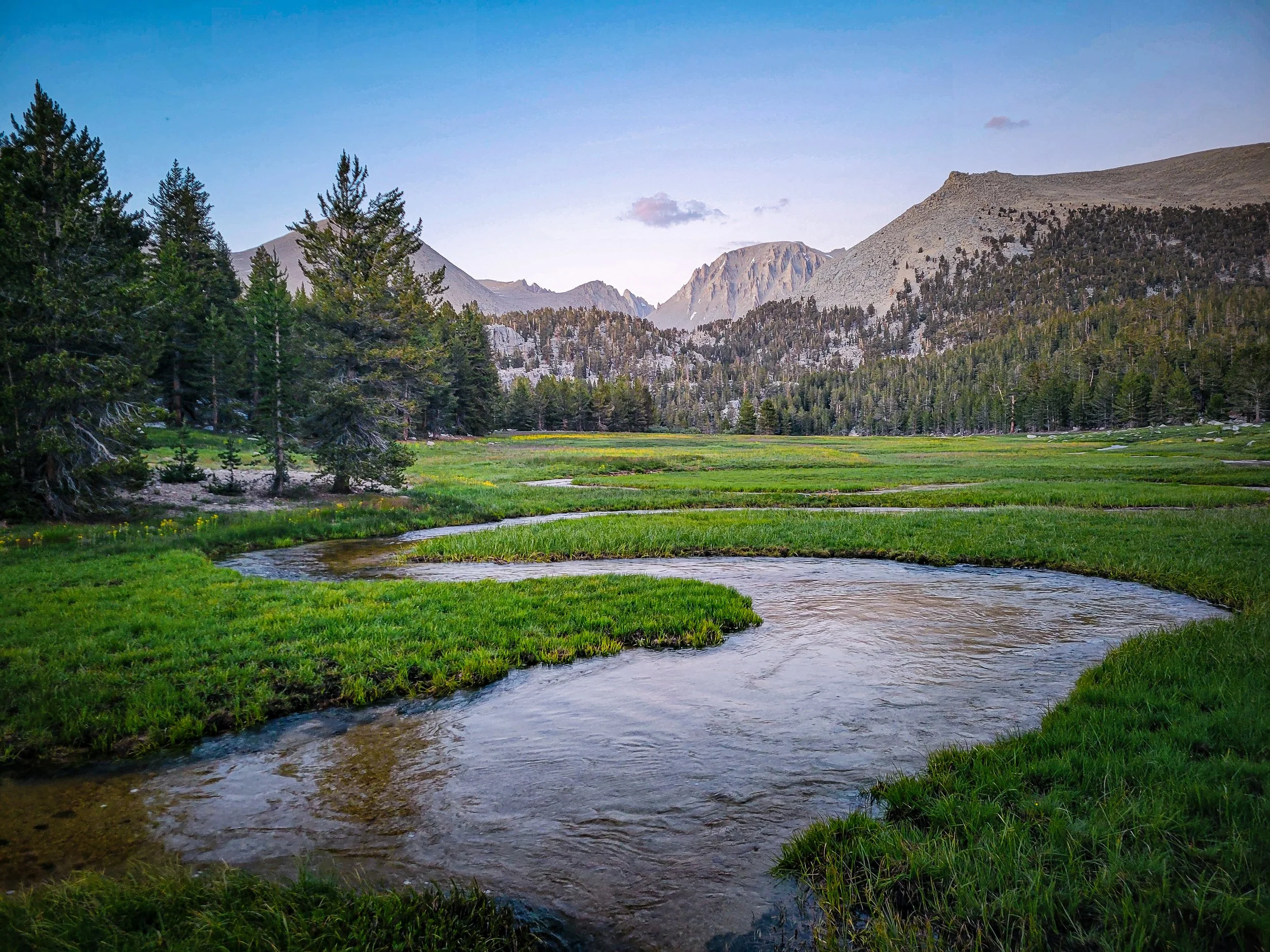
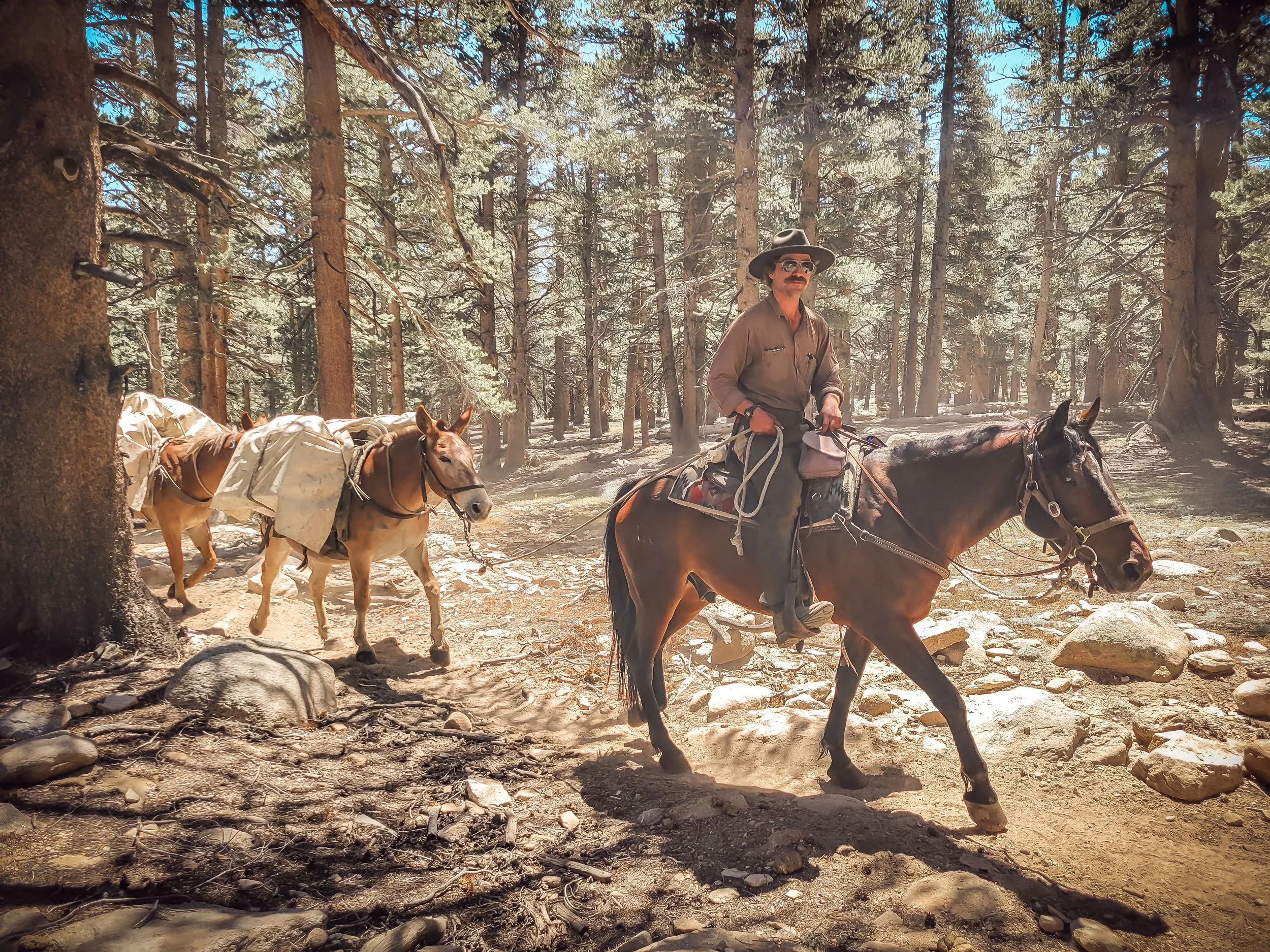
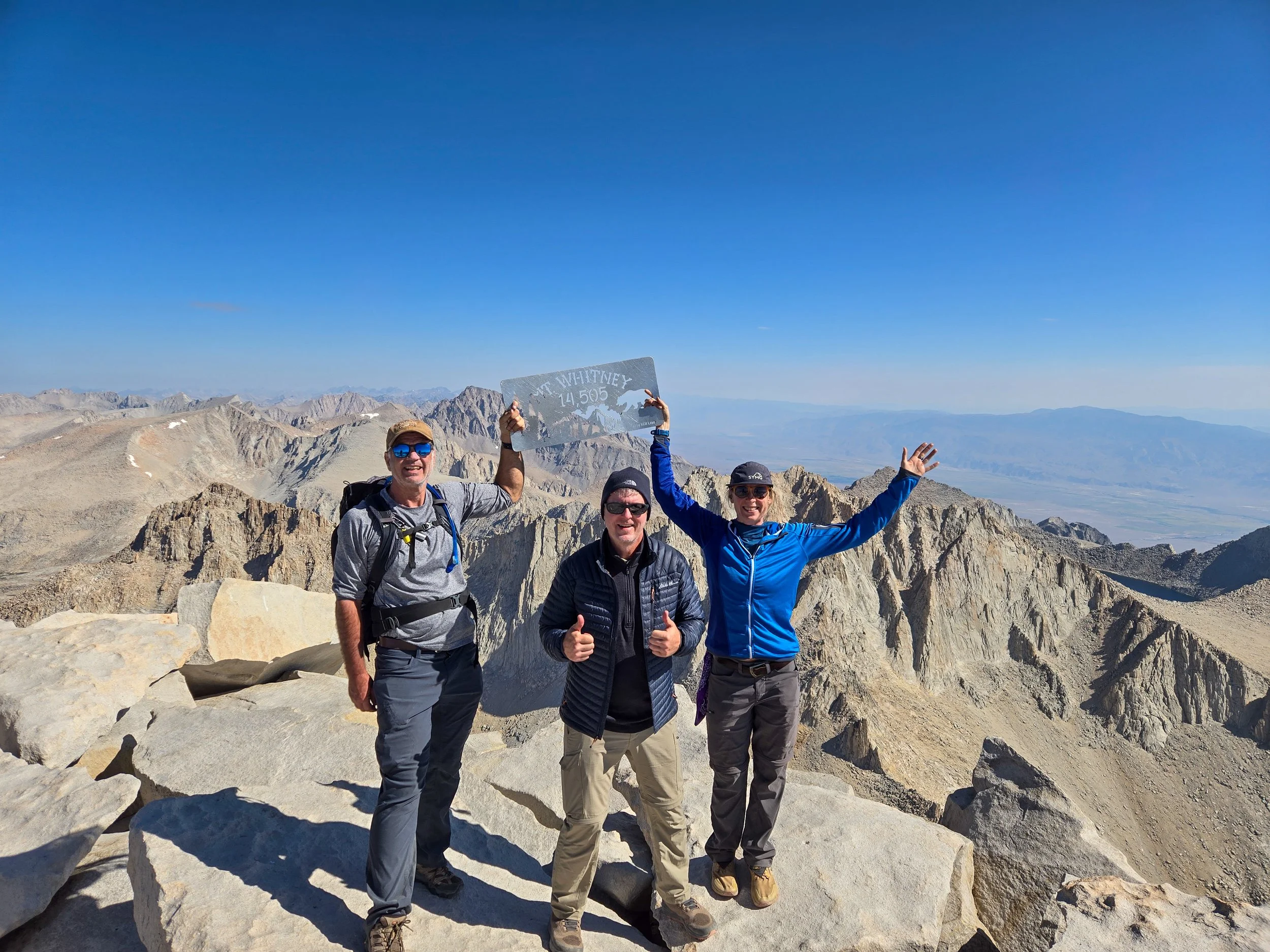
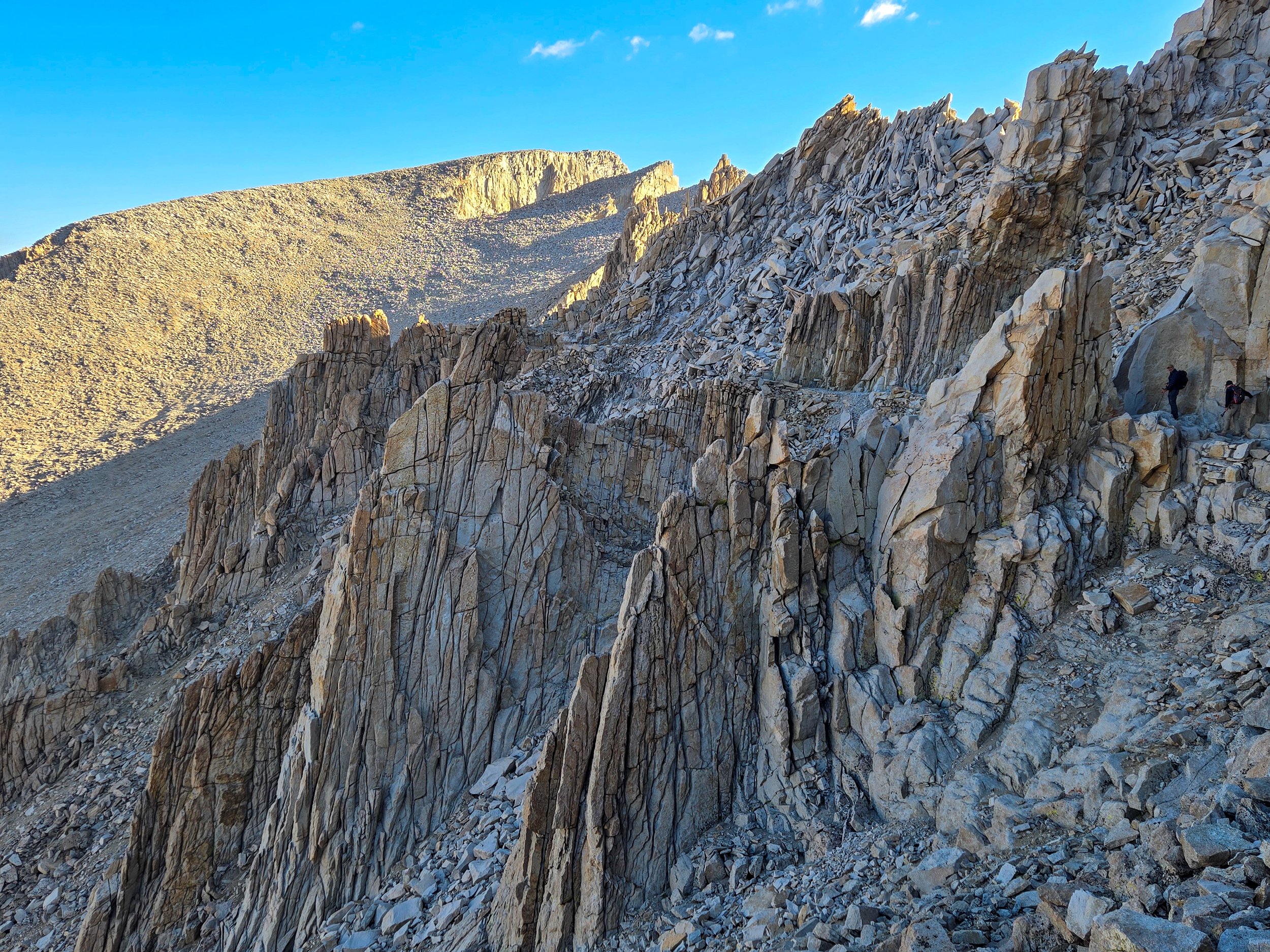
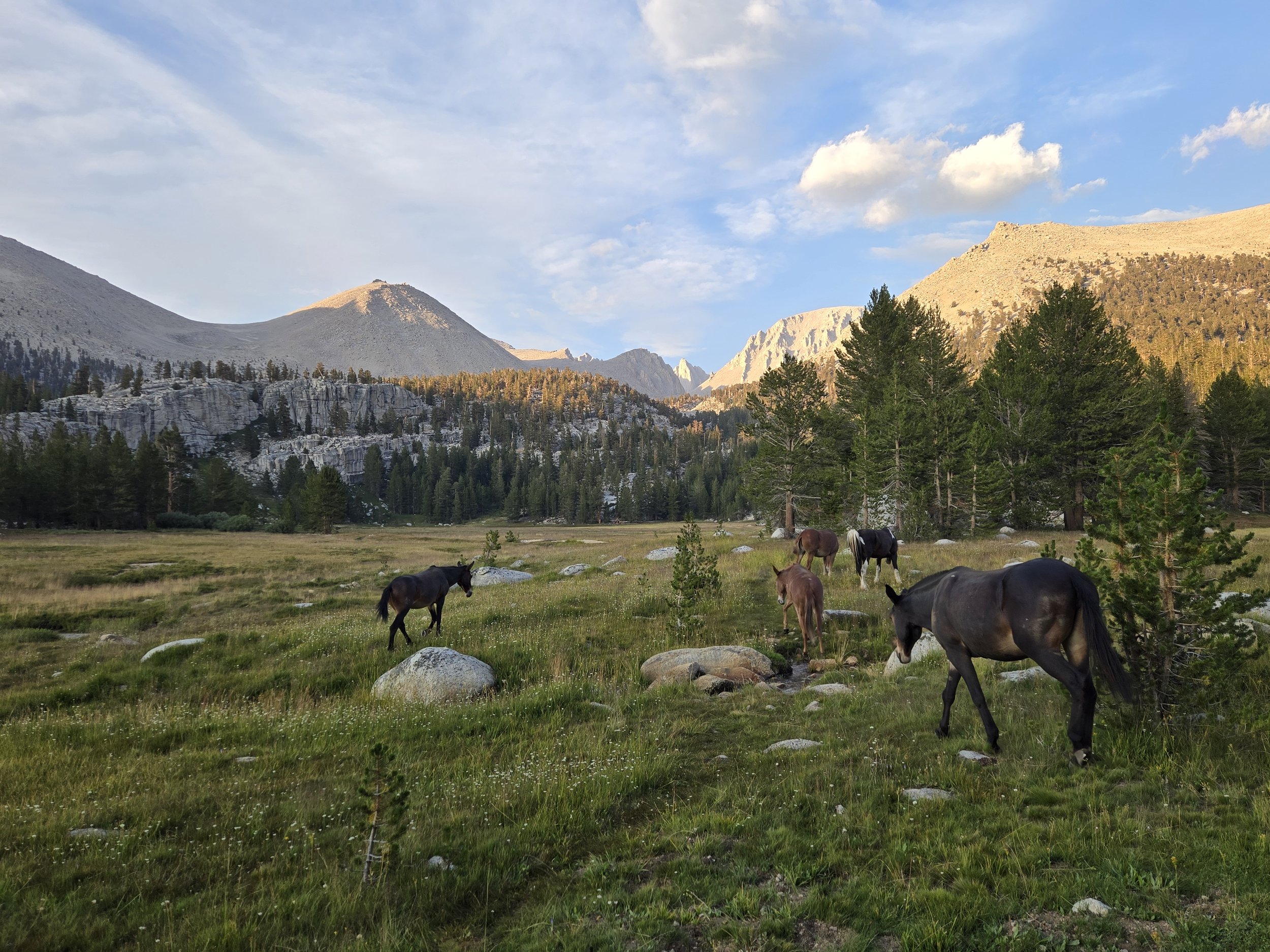
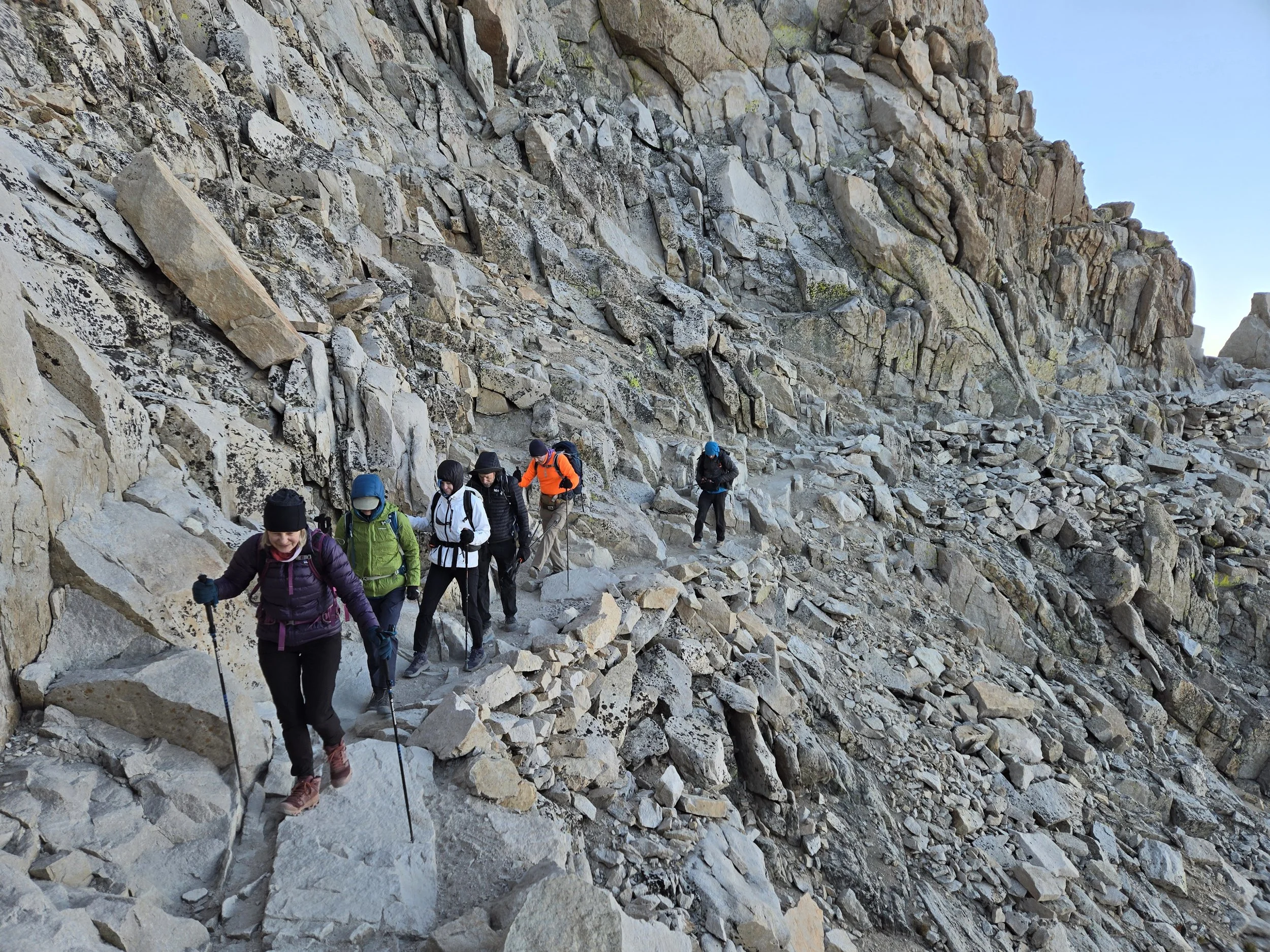
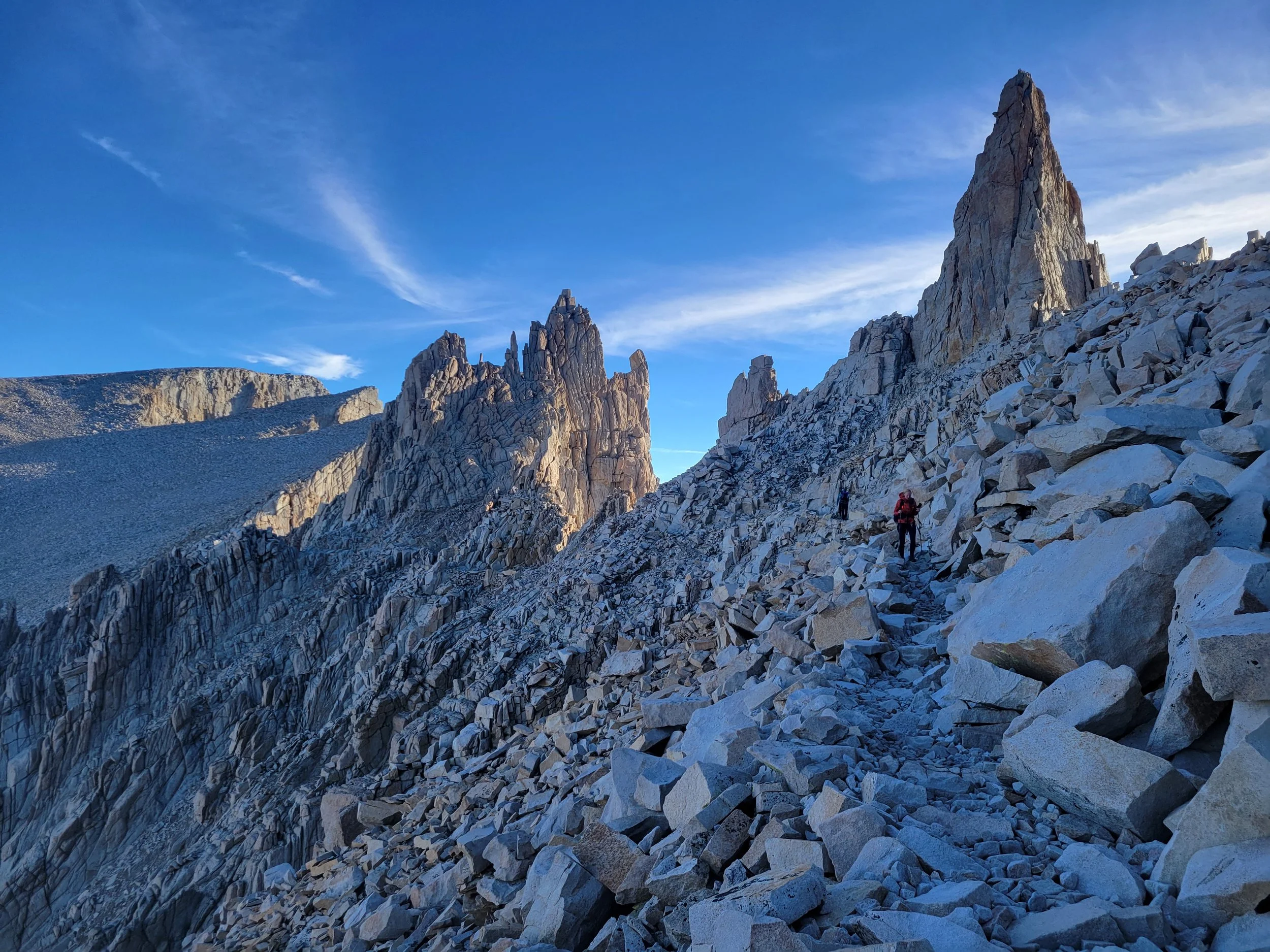
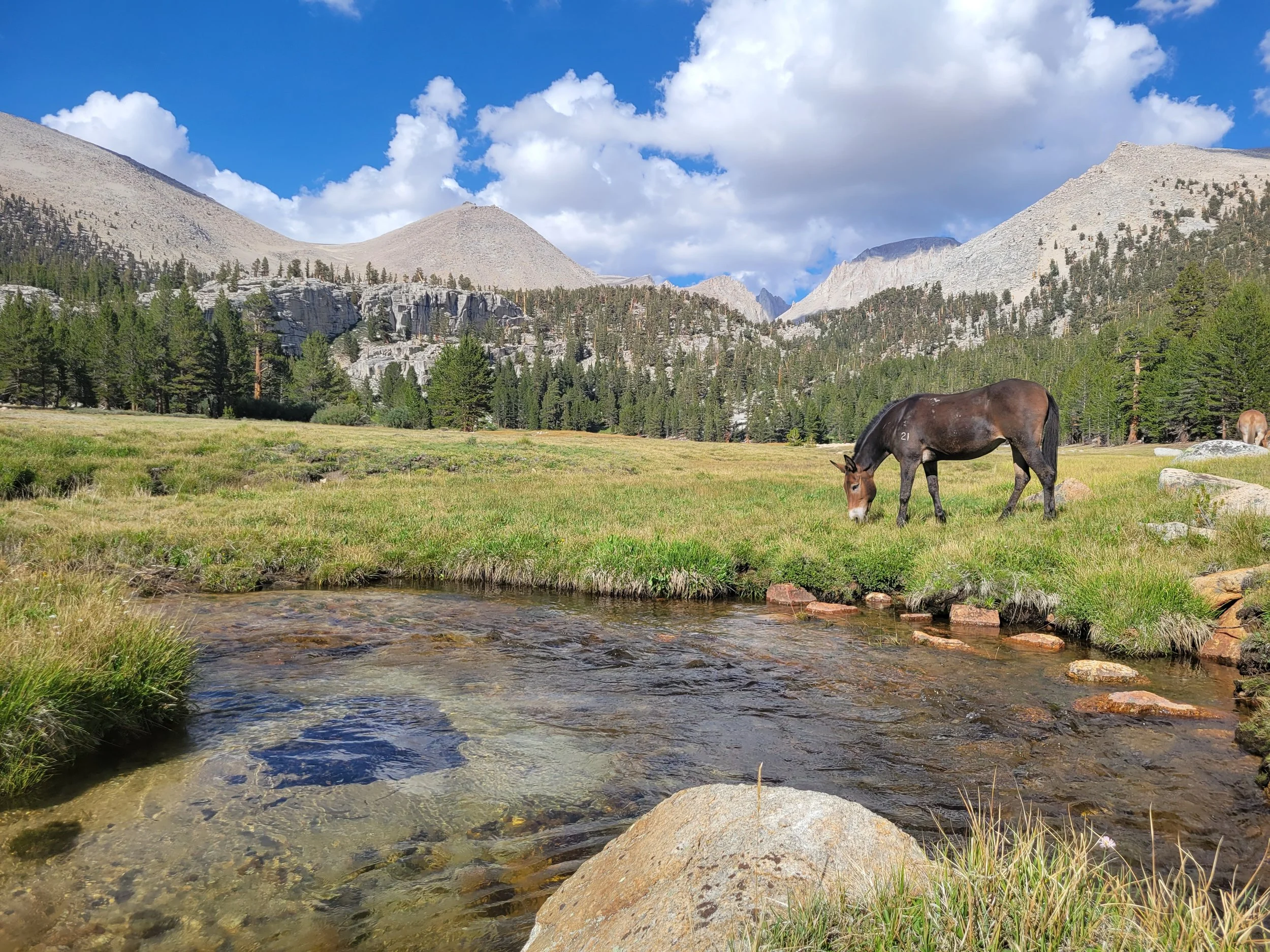
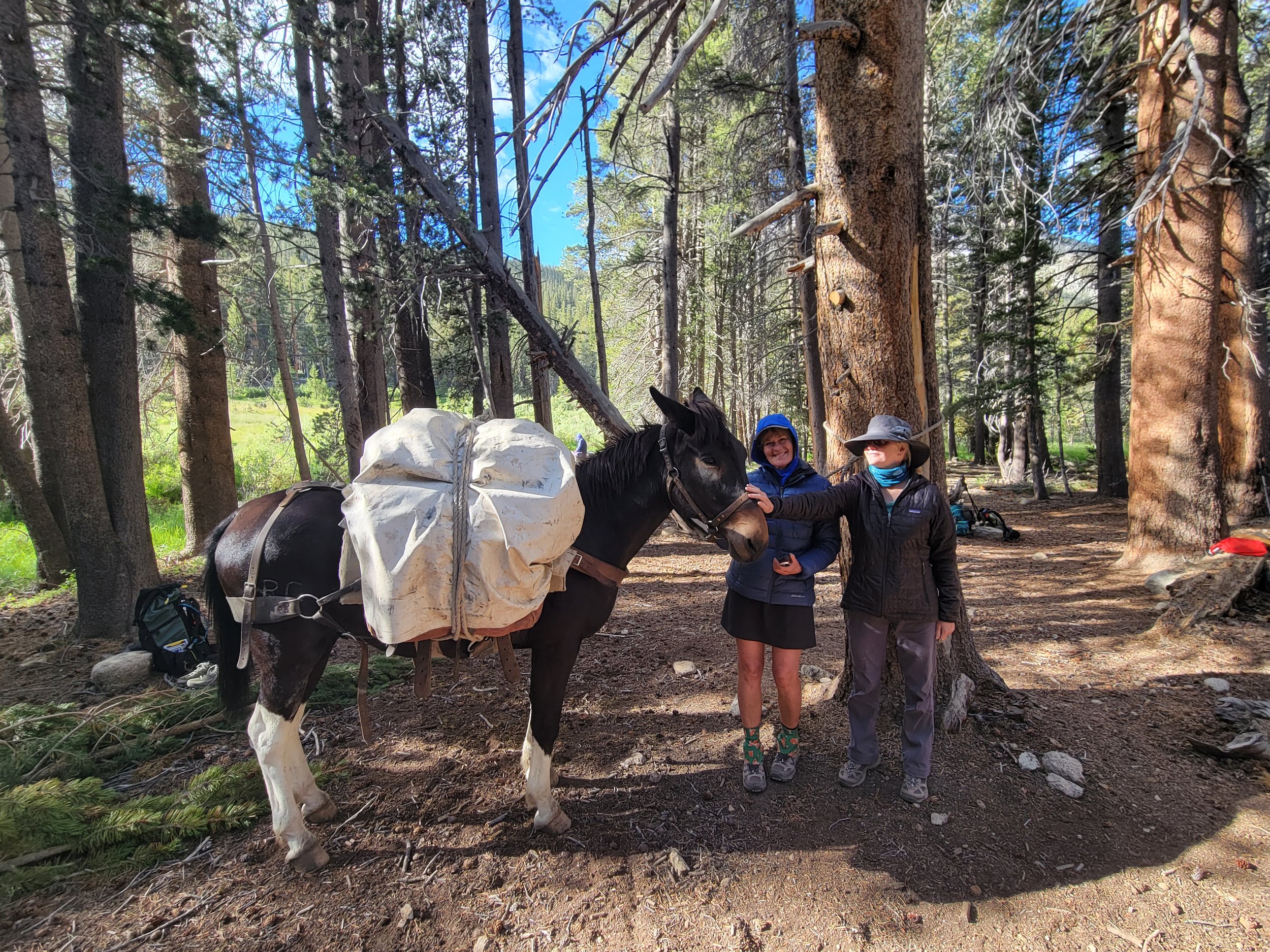
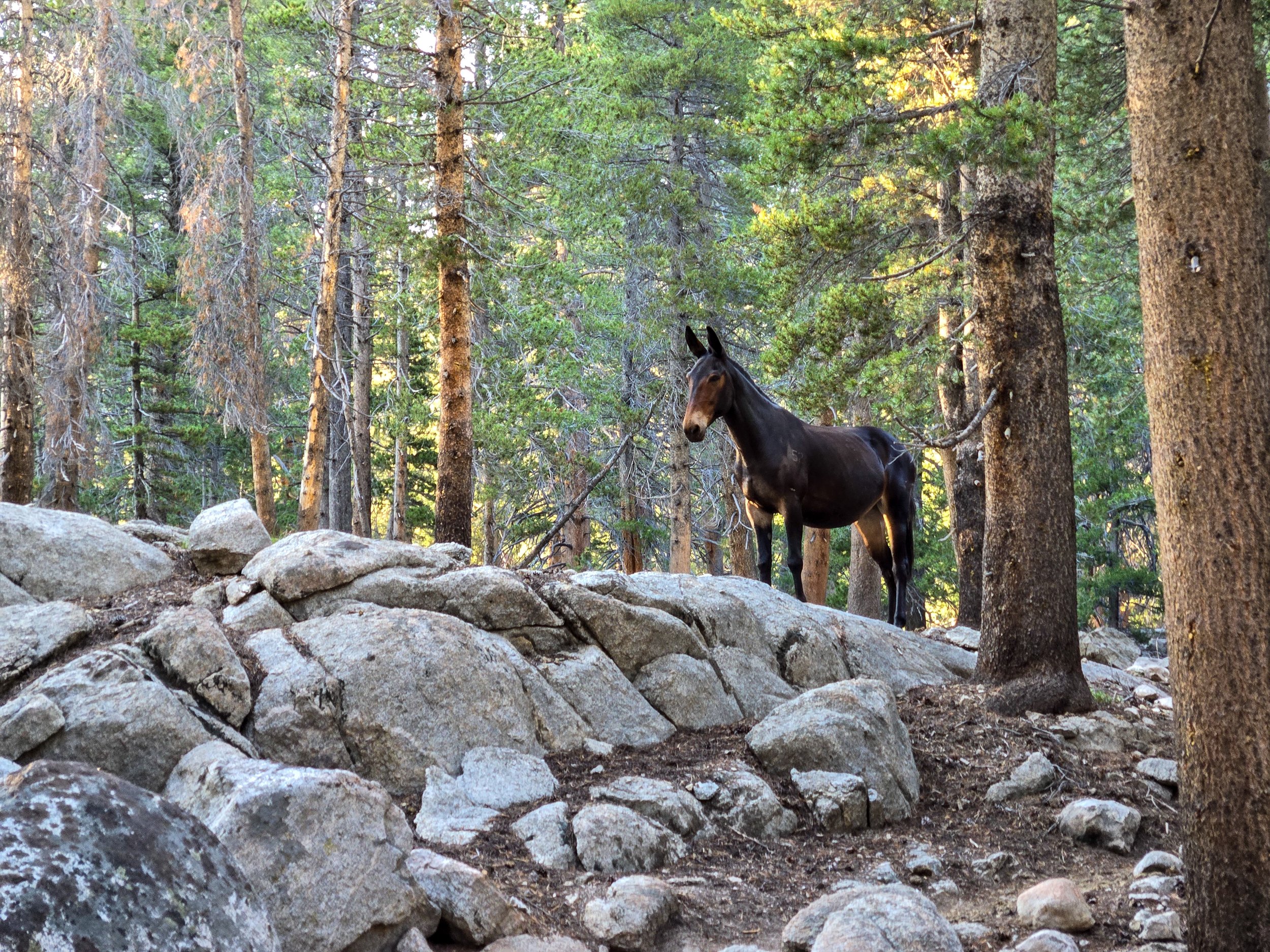
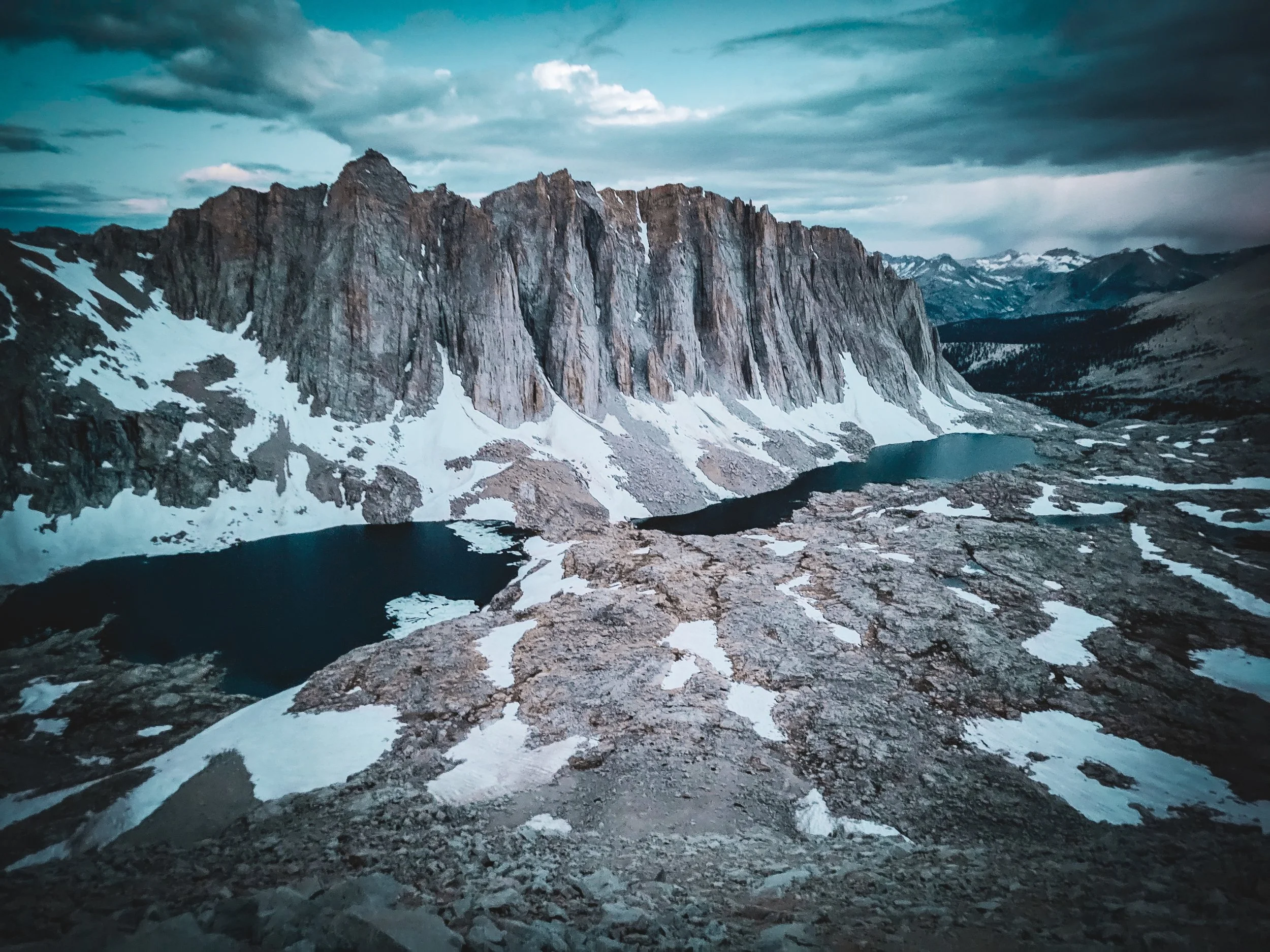
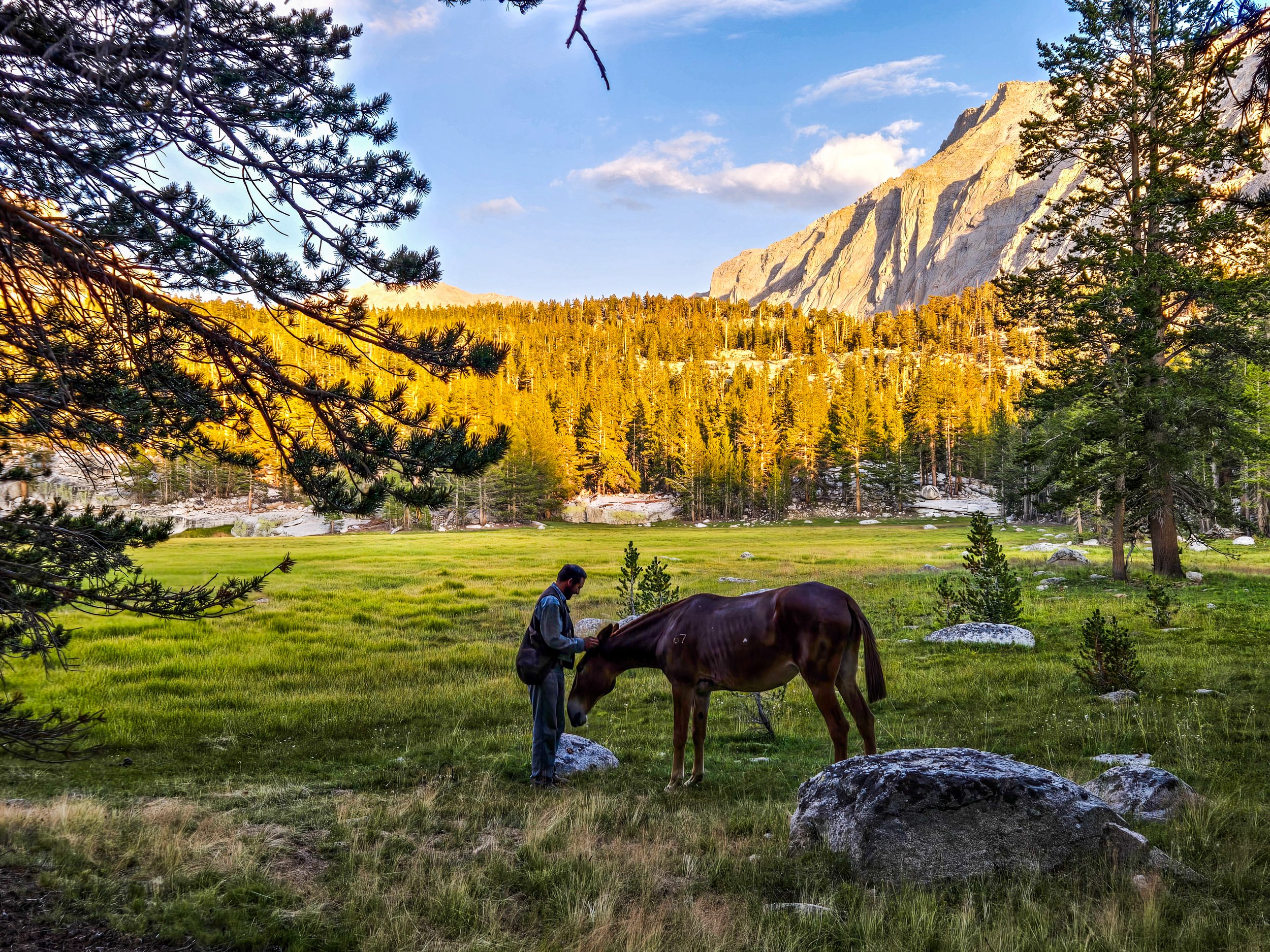
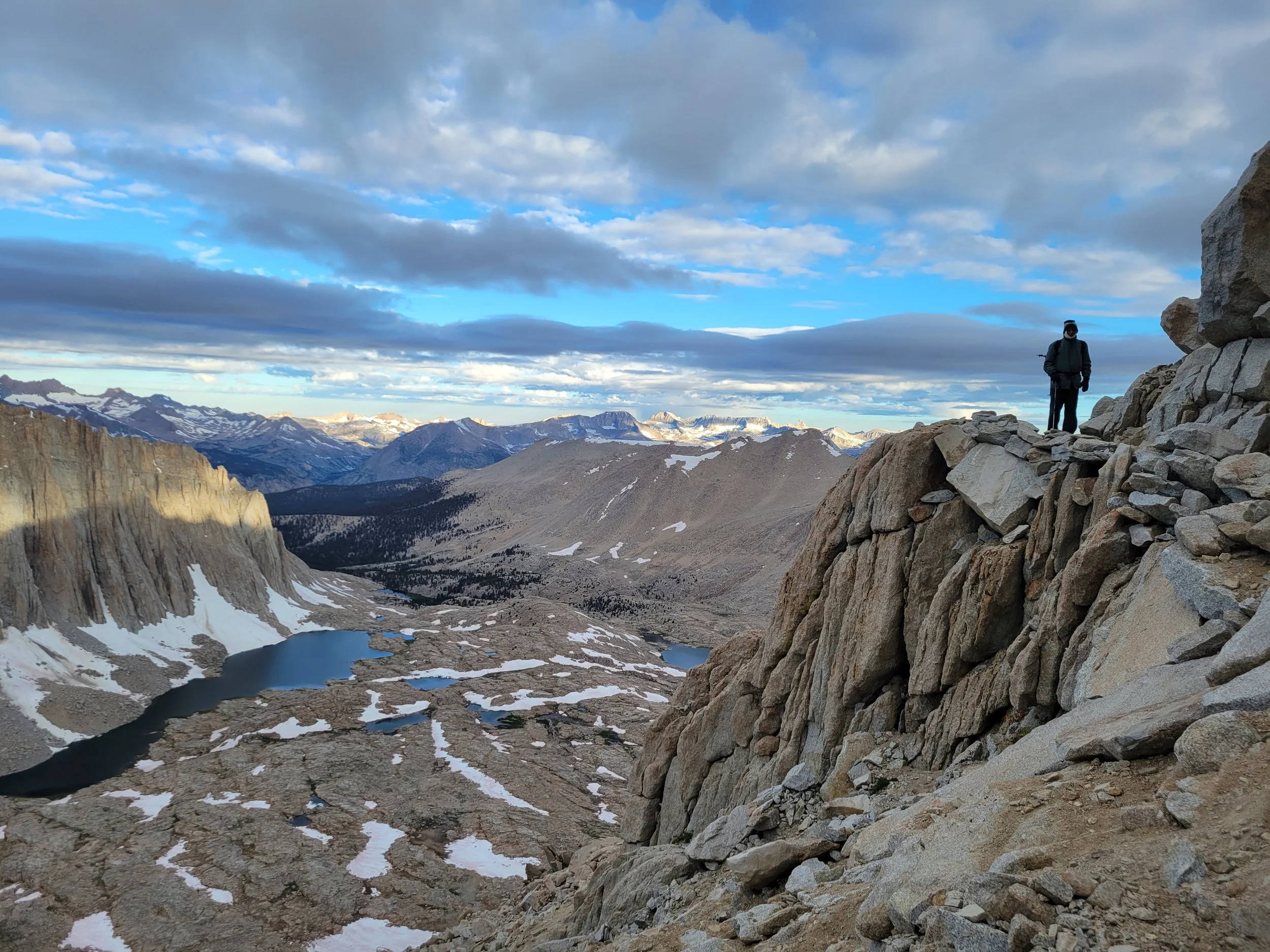
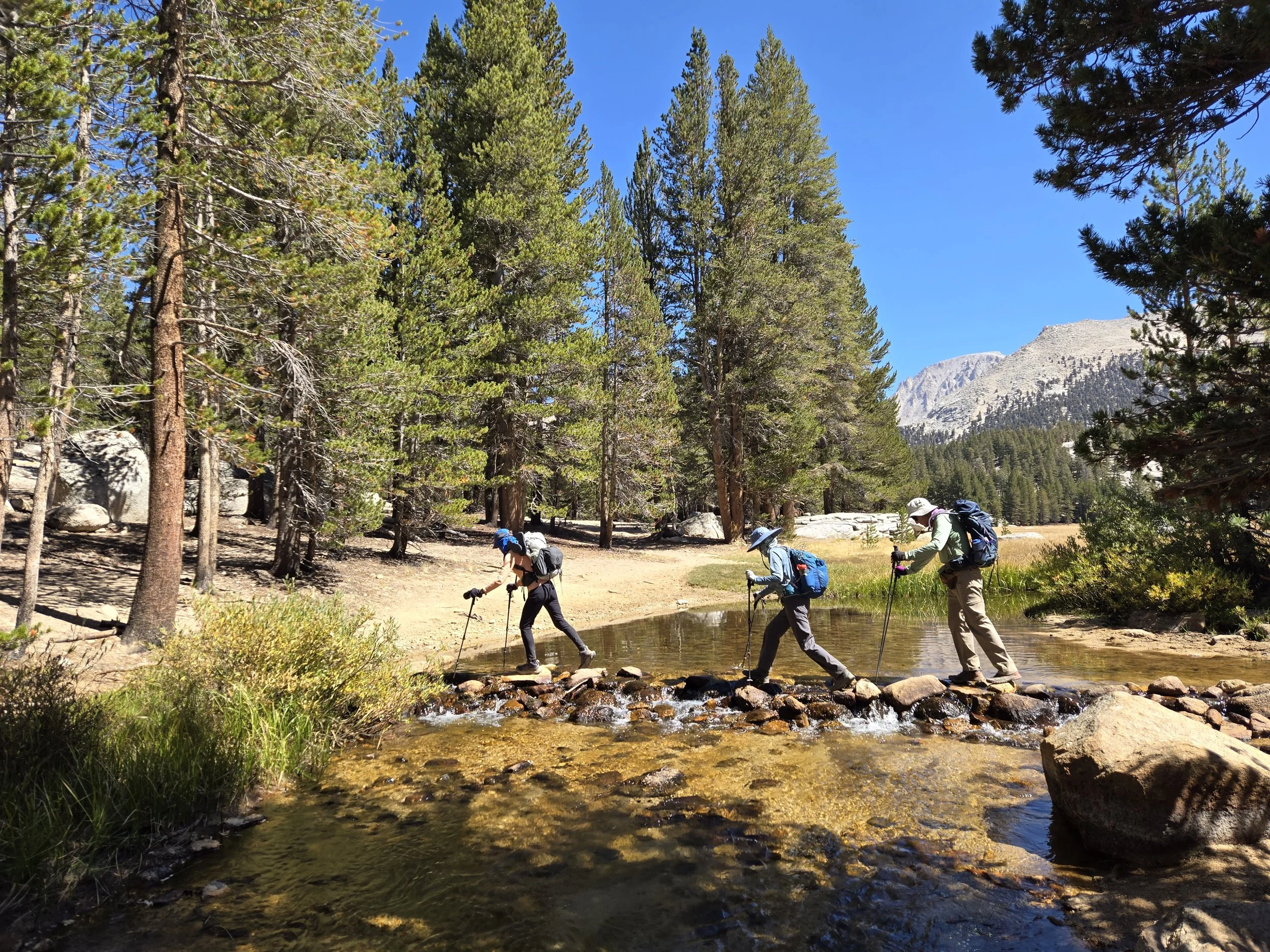
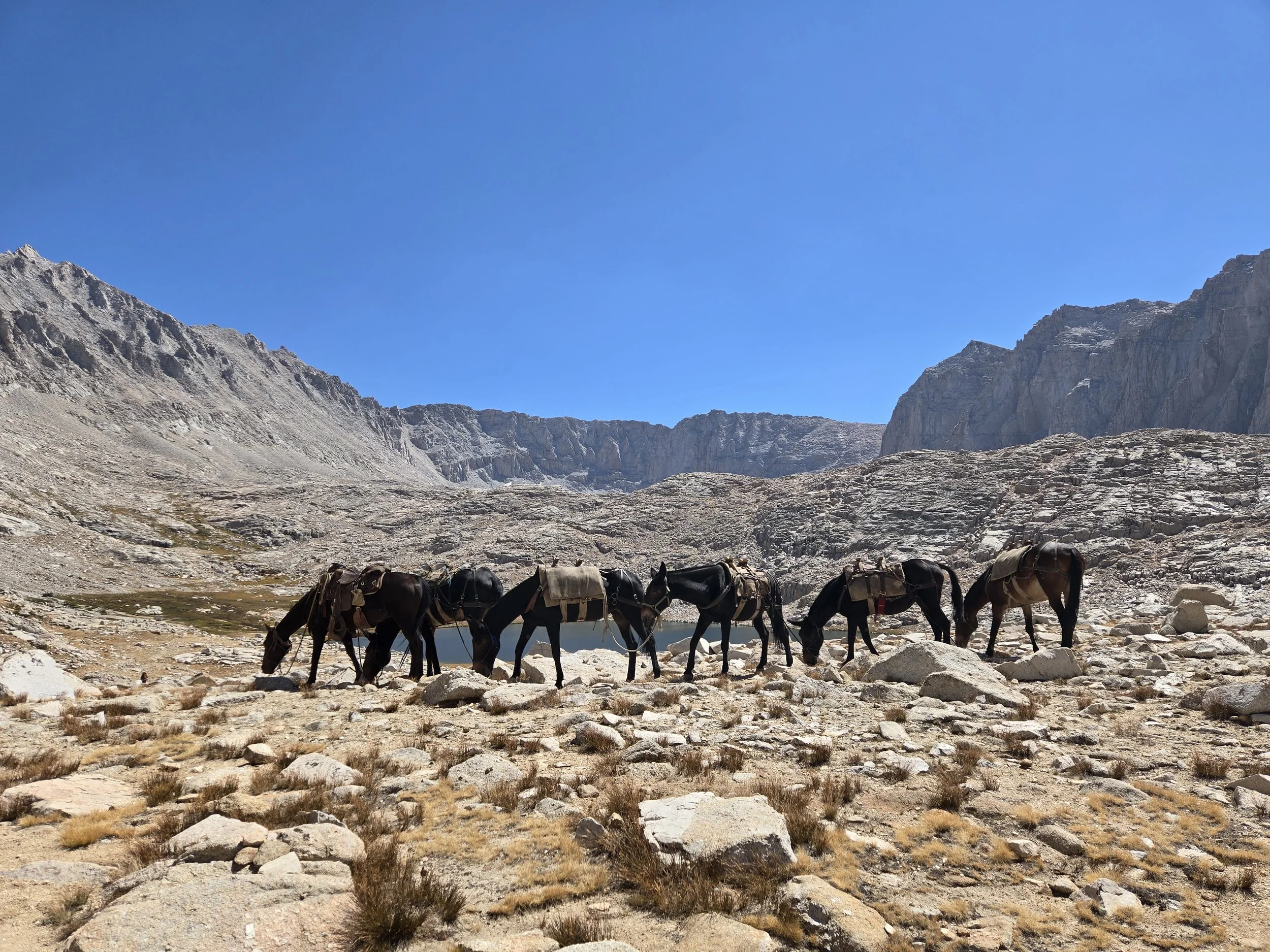
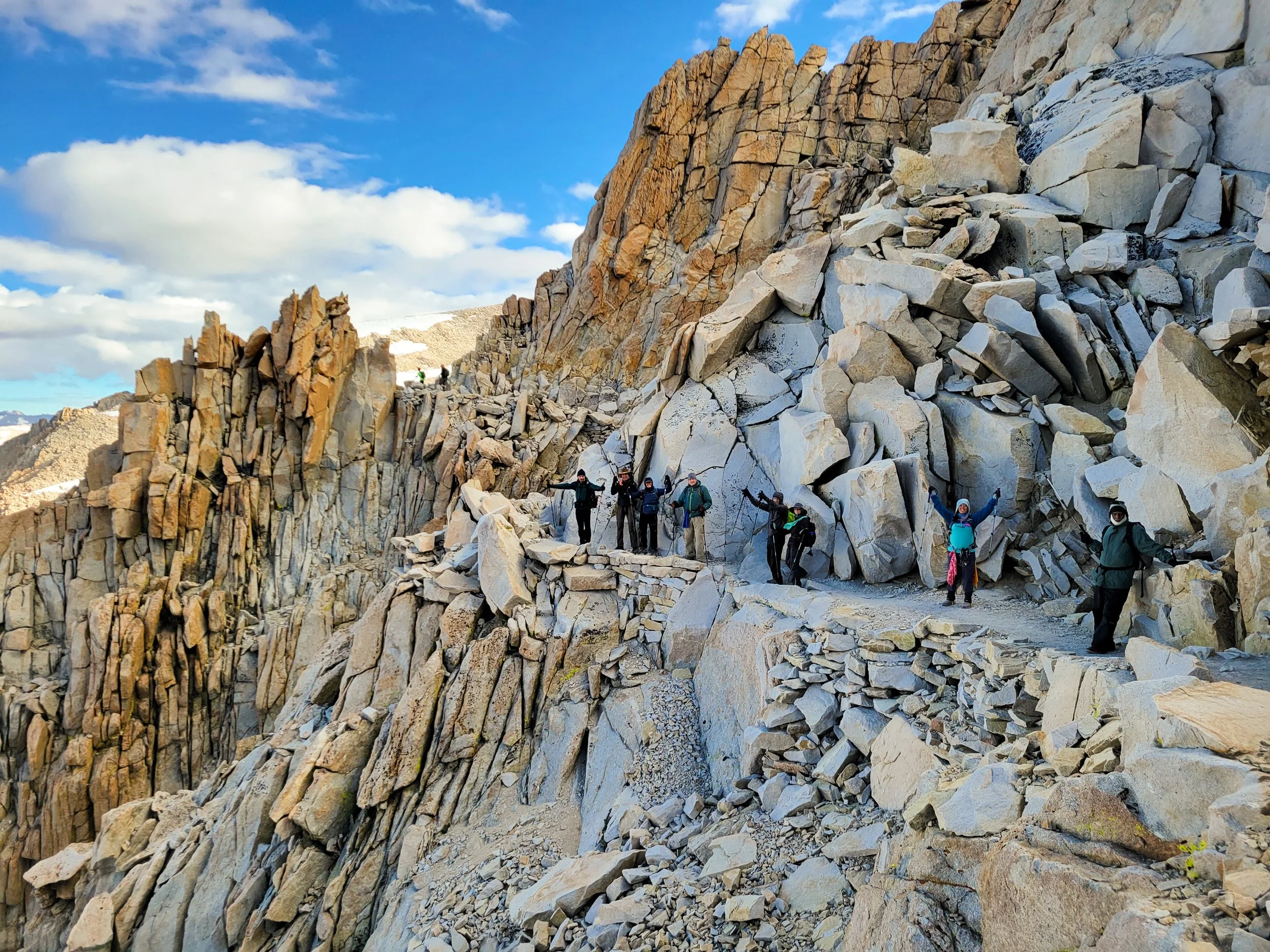
Rising to 14,505 feet, Mount Whitney is the crown jewel of the Sierra Nevada- and one of North America’s most iconic hiking destinations. This unique journey blends challenge and comfort as we travel mule-assisted through the remote wilderness of Sequoia-Kings Canyon National Park. While the livestock carry the gear, you only carry a daypack, allowing you to hike unburdened and fully take in the beauty of the backcountry. You’ll follow scenic sections of the legendary John Muir Trail and Pacific Crest Trail in the southeastern Sierra, surrounded by ancient groves of endemic foxtail pines, crystalline alpine lakes, meandering creeks through lush meadows, and vibrant displays of wildflowers. Each evening, you’ll settle into camp with gourmet backcountry meals and the serene glow of mountain twilight. On summit day, watching the first light spill across the Sierra from the highest point in the contiguous United States is a moment of true awe- a celebration of endurance, wild beauty, and connection to something greater.
*Operating under permit with the USDA Forest Service through Rock Creek Pack Station’s Special Use Permit for the Inyo National Forest
Trip Stats
Difficulty
▢ ▢ ▢ ▢ ■
Challenging / Strenuous
Trip Length: 7 Days / 6 Nights
Total Mileage: 63 miles
Daily Hiking: 5–15 miles
Elevation Range: 8,300–14,505 ft
Total Elevation Gain: +11,870 ft
Total Elevation Loss: -11,800 ft
Pack Weight: 15 lbs (pack-supported)
Cost: $4,095 / person
-
Day 1- Meet your guides in Lone Pine, CA.
We’ll begin our trip with a one night stay at the Best Western Hotel in Lone Pine, CA, with Mt. Whitney looming on the western horizon. Meet your guide and group for an orientation at 5 pm. Dinner is then on your own in town.
Day 2- Camp at Chicken Springs Lake.
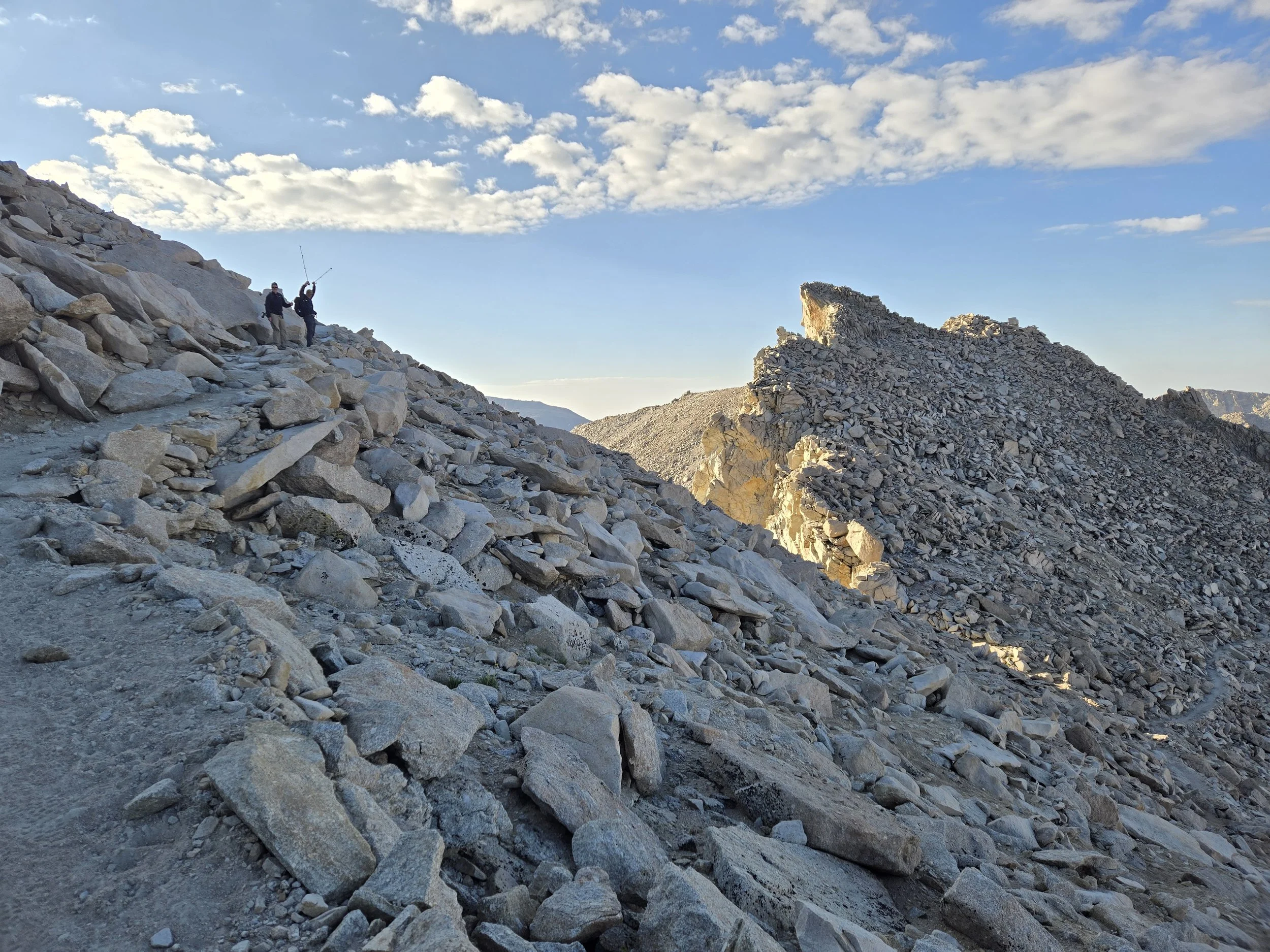
Grab breakfast at the Best Western or a local cafe down the street. At 8am, we’ll caravan up to the pack station, about 45 minutes from town, and offload our gear for the mule train. After that, we’ll lace up our boots and hit the trail! Our first night's camp is at Chicken Springs Lake. Though a short day, it’s a big one, as we climb 1300’ over Cottonwood Pass (11,140’).
4 miles, Elevation: +1516' / -217'
Day 3- Hike along the Pacific Crest Trail.
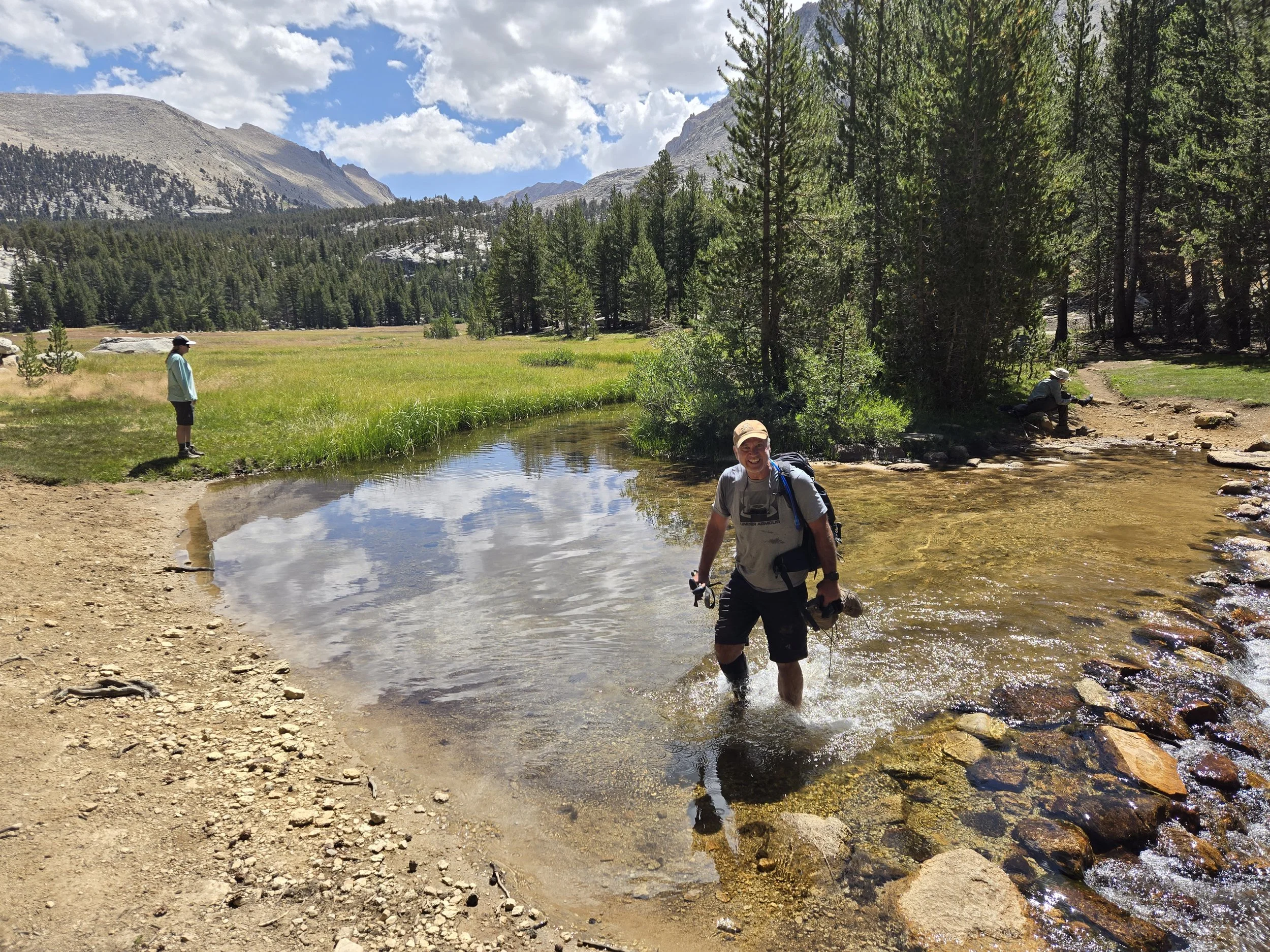
Today we'll follow the famous Pacific Crest Trail through majestic Foxtail Pine forests, and on to the lower reaches of Rock Creek, where we’ll make camp and enjoy taking a dip in the creek.
9 miles +632'/ -2,128'
Day 4- Hike to Guitar Lake.
Leaving camp, we’ll travel over Guyot Pass to Crabtree Meadows, where we will turn towards Mt. Whitney and steadily hike to Guitar Lake, where we’ll set up our camp and settle in early in preparation for our early start for our summit bid.
11 miles, Elevation: +2,985'/ -1,826'
Day 5- Summit Mt. Whitney (14,505 ft.).
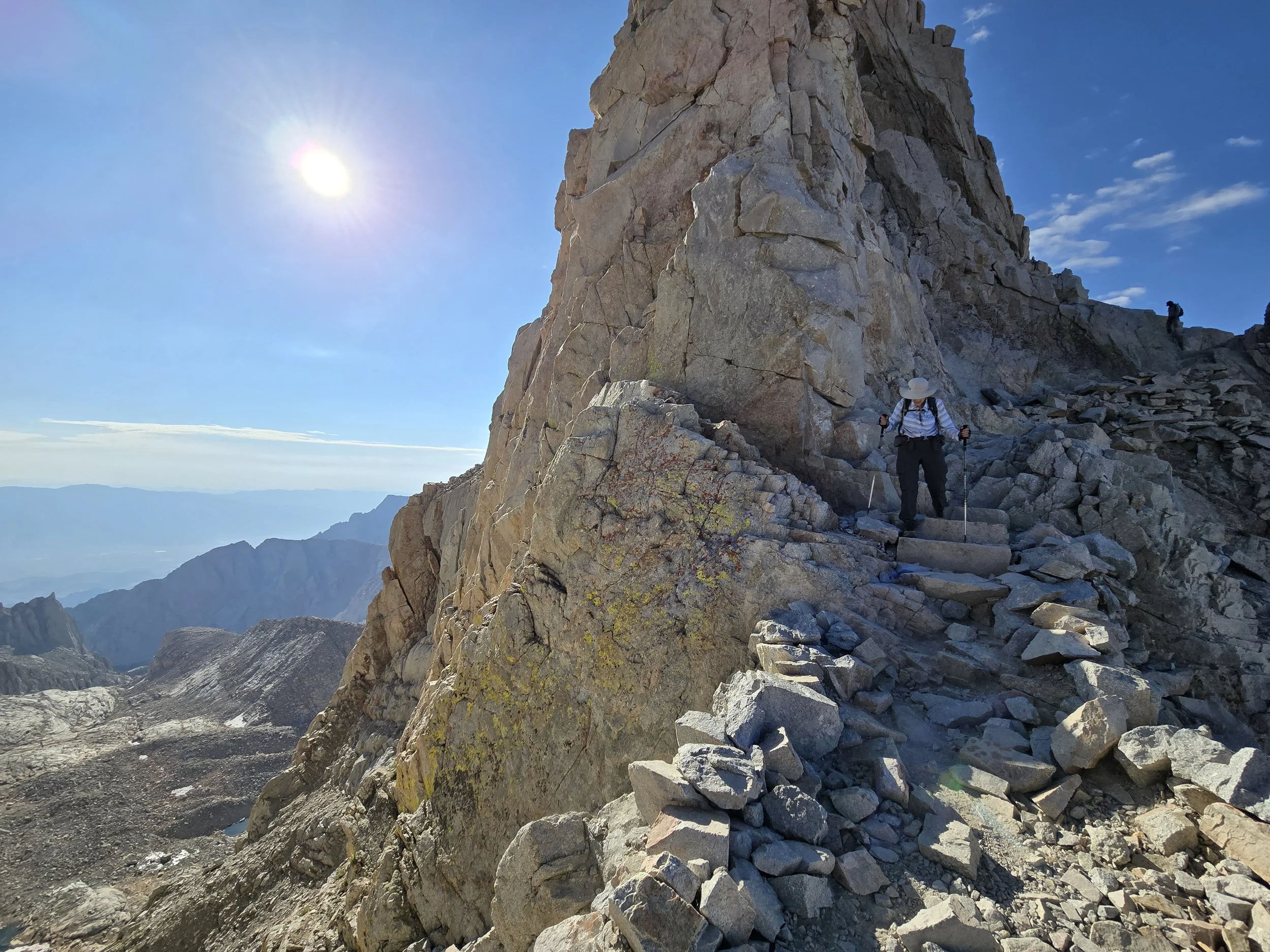
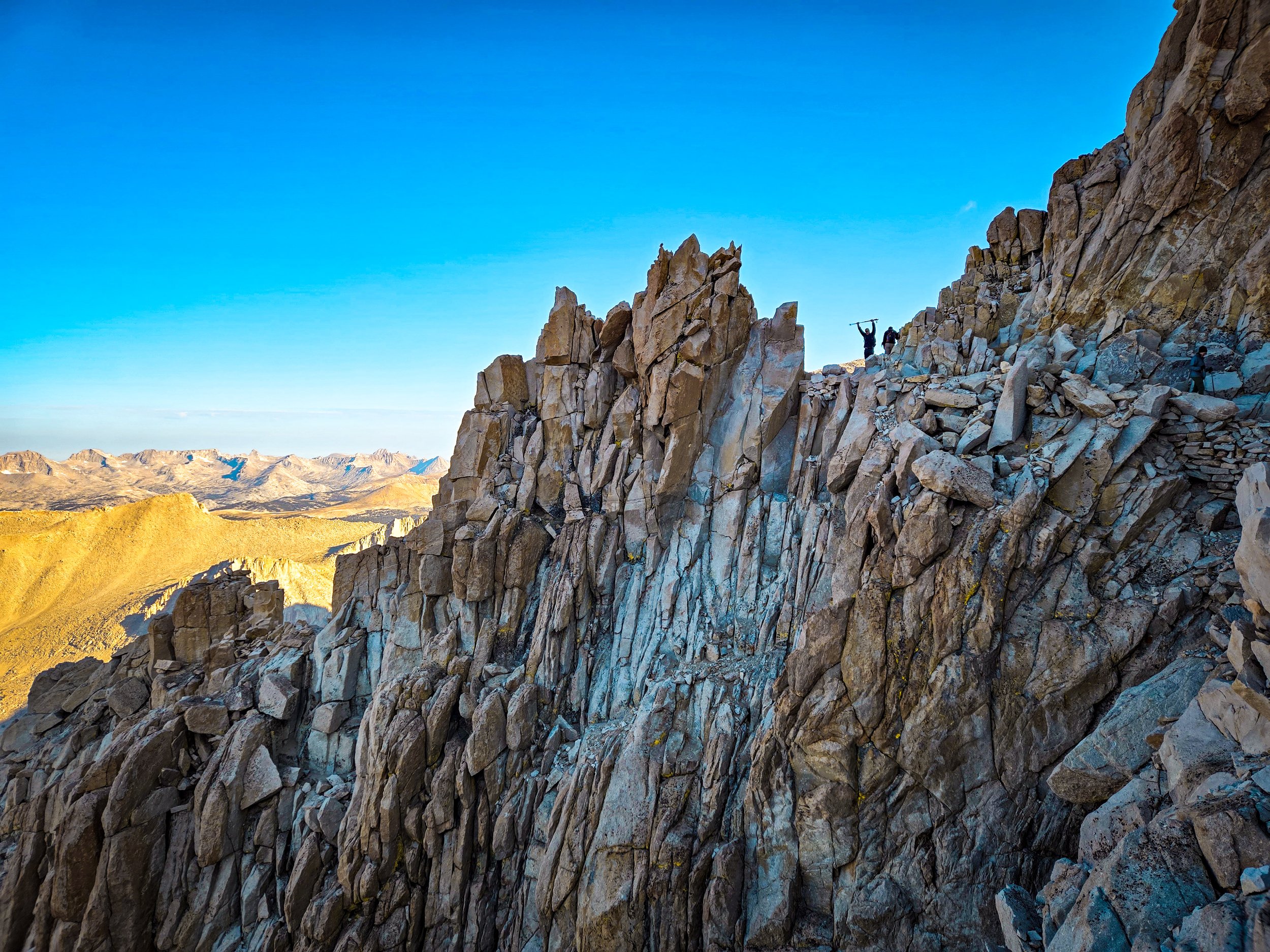
We’ll make an alpine start, hitting the trail long before sunrise for our summit attempt of Mt. Whitney. After taking in the panoramic views from the highest point in the US outside of Alaska, we’ll make our way back to camp for a siesta. The day’s work is not over as we pack up camp and hike a few miles back to Crabtree Meadows. After a celebration supper, we’ll enjoy a memorable sunset over Mt Russell and enjoy a much needed rest after a big day.
15 miles, Elevation: +4,118'/ -4,475'
Day 6- Hike to Rock Creek Lake.
Waking with a sense of accomplishment, we’ll begin our hike back southward through Sequoia- King’s National Park. An alternate route than how we arrived will see us to the headwaters of Rock Creek near Soldier Meadow. 10.5 miles, Elevation: +1,926'/ -1947'
Day 7- Exit the backcountry via Cottonwood Trailhead.
Packing up camp one last time, we’ll exit the High Sierra back via Cottonwood Pass, which will have us back to our vehicles at the trailhead in the early afternoon.
10 miles, Elevation: +1,602'/ -1,192'
-
Expert AWE wilderness guides
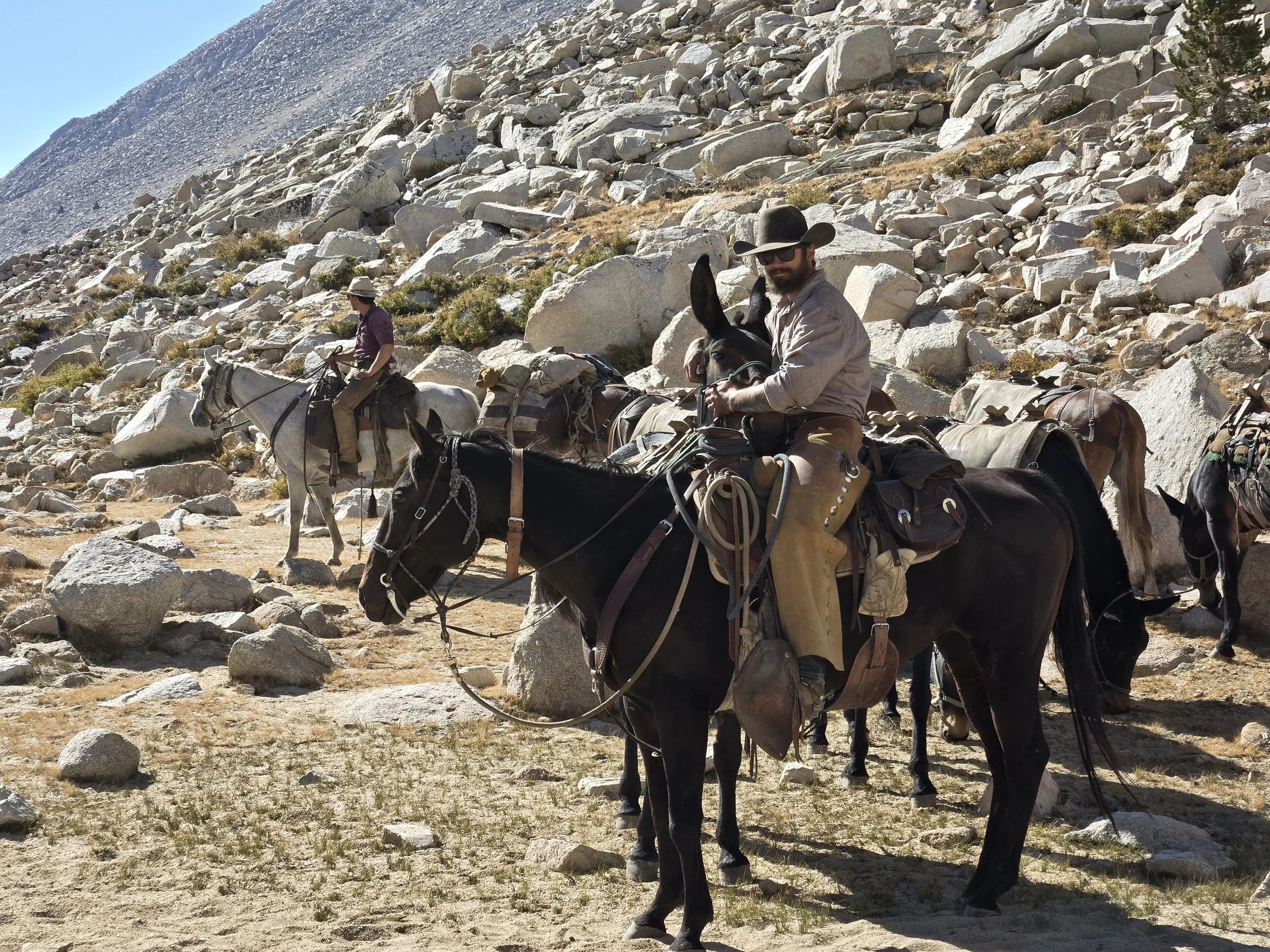
Pack animals and experienced wranglers
Required permits and logistics coordination
Accommodations
• 1st night's stay at the Best Western Hotel in Lone Pine, CA
• 5 nights of wilderness tent camping
Food
• Starting with lunch on Day 2 and ending with lunch on Day 7
• Gourmet backcountry meals including trail snacks
Gear
• All group gear including stoves, cookware, water filters, chairs, group first aid kit, bathroom kit, etc.
• Personal camping gear provided by request: Backpacks, sleeping bags, sleeping pads, and trekking poles.
-
Your adventure begins at the Best Western in Lone Pine, California, where the group will meet on the day before the trip for a pre-trip orientation.
If you're flying, the following airports offer convenient access to Lone Pine:
Hollywood Burbank Airport (BUR) – Approximately 3.5–4 hours by car (our recommended airport for most travelers)
Harry Reid International Airport (LAS) – Approximately 3.5–4 hours by car
Bishop Airport (BIH) – Approximately 1 hour by car (limited commercial service)
Mammoth Yosemite Airport (MMH) – Approximately 1 hour 45 minutes by car (seasonal service)
A rental car is recommended for travel to and from Lone Pine. Guest vehicles may be parked at the trailhead for the duration of the trip, as this is where our adventure both begins and ends.
-
❌Trip Insurance (strongly recommended)
❌Recommended 10-20% gratuity for guide(s) and 3% for packers based on overall satisfaction of trip.
❌Transportation to and from trailhead
❌Personal clothing & footwear (a packing list will be emailed upon booking).
❌Dinner on the first night in Lone Pine
❌Airfare
❌Evacuations
-
Unless you are willing to absorb the entire cost of your trip in the event of a cancellation or early exit, it is recommended that you obtain travel insurance to protect your investment. AWE is not liable for cancellation fees or costs pertaining to your changed or canceled flights, rentals, lodging, or other arrangements (travel insurance can cover those costs). We recommend you call and speak with agent(s) before purchasing.
Our recommendations (please do your own research to see what best suits your needs):
Travel Guard- travelguard.com
World Nomads- worldnomads.com
ADD Cancel for Any Reason (CFAR) Coverage to your insurance plan – it’s highly recommended you add this to your policy. You often need to purchase this coverage within a short timeframe of making your reservation (typically 1-2 weeks).
-
Full Payment: Due 60 days before trip departure
Cancellation 60+ days before departure: 75% of deposit refunded or transferred to another trip in same season.
Cancellation within 60-45 days of departure: 50% of trip cost refunded or transferred to another trip in same season.
Cancel 45 days or less, non-refundable, non-transferable.
Cancellation policies are necessary for operating “tour-type” programs with high up-front costs and overhead. While AWE operates within industry standards and strives to be fair, there are many things are out of our control.
By their nature, backcountry adventures are uncertain endeavors. Many factors can influence the arrival to, the running of, or the outcome of an AWE program. Therefore, AWE strongly suggests obtaining “cancel for any reason” travel insurance before embarking. Weather, route conditions, or your own abilities may create circumstances that make continuing an AWE program unsafe or unwise, and you and/or your party may have to exit early. No refunds are given if a program ends early due to weather or route conditions. If this occurs your guide will offer to spend your remaining time pursuing a different or more feasible route. There is no credit for any days that go unused.
Should AWE need to cancel due to unforeseen circumstances (government closures, etc), we will offer you the opportunity to change programs, reschedule, or refund without penalty.
-
Mt. Whitney Traverse Training Program:
Challenge Level: Advanced–Intermediate (pack-supported)
The Mt. Whitney Traverse is considered an advanced–intermediate challenge level trip. It is designed for hikers with a strong baseline level of fitness who are comfortable hiking 8–15 miles per day on steep, mountainous terrain over multiple consecutive days. While pack-supported travel significantly reduces the weight you carry, guests should arrive prepared for long days on trail, sustained elevation gain, technical footing, and high altitude, with elevations ranging from approximately 8,000 ft. to 14,505 ft.
This trip demands endurance, strength, and mental resilience, particularly due to prolonged climbs and time spent above 10,000 feet. Arriving well-conditioned will significantly enhance both comfort and safety at high altitude.
Minimum Fitness Expectations:
Before your trip, you should be able to:
Hike 10–15 miles in a day on mountainous terrain
Carry a 10–15 lb daypack comfortably for full-day hikes
Complete 2–3 consecutive long hiking days without excessive fatigue
Manage sustained uphill travel, steep descents, and uneven or rocky terrain
Maintain steady pacing at altitude
Recommended 10–12 Week Training Plan
The best training for hiking is hiking. We recommend building toward a consistent schedule that closely mimics the physical demands of the Mt. Whitney Traverse, with a strong emphasis on elevation gain and endurance.
Weekly Structure:
Aim for 4 training sessions per week, including:
1–2 Short Hikes (Midweek)
Distance: 4–7 miles
Terrain: Rolling hills, local trails, stair climbs, or incline treadmill
Focus: Cardiovascular fitness, climbing strength, and pacing
Pack: Start light and gradually increase to 10–15 lbs
1 Long Hike (Weekend)
Distance: Build from 8 miles up to 12–16 miles
Terrain: Steep, uneven, or rocky trails when possible
Elevation Gain: Progressively increase elevation gain over time
Pack: Daypack with water, layers, food, and trekking poles
Back-to-Back Hikes (Strongly Recommended)
Every 2–3 weeks, include two consecutive hiking days to prepare for sustained effort on the traverse.
Day 1: Longer mileage or higher elevation gain
Day 2: Moderate mileage while hiking on fatigued legs
Strength & Conditioning (1–2x per week)
Strength training is highly recommended to support long climbs and descents and reduce injury risk.
Focus on:
Squats and lunges
Step-ups (weighted if possible)
Deadlifts or hip hinge movements
Core strength (planks, side planks, balance work)
Ankle, knee, and hip stability exercises
Elevation & Terrain Considerations
Whenever possible:
Train on uneven and rocky terrain
Prioritize elevation gain over flat mileage
Practice steady pacing and rest-step techniques
If you live at low elevation, arrive well-rested and hydrated to support acclimatization
Footwear & Gear Prep
Train in the same footwear you plan to use on the trip
Fully break in boots or trail shoes well in advance
Practice hiking with trekking poles, especially on steep climbs and descents
Test layers and sun protection suitable for alpine environments
Rest, Recovery & Mindset:
Rest days are essential for adaptation and injury prevention. Listen to your body, allow recovery, and fuel properly throughout training. A positive mindset, patience with altitude, and flexibility in changing mountain conditions are just as important as physical preparation.
*If you have questions about fitness readiness, altitude concerns, or gear selection, we encourage you to reach out before booking. We’re happy to help you prepare and ensure the Mt. Whitney Traverse is a strong and rewarding fit.
-
Pack-Supported Trip Gear List
Pack-supported travel allows you to hike light while essential overnight gear is transported by pack animals. Guests carry only a comfortable daypack during the hiking day. Please review the list below carefully and reach out with any questions.
What AWE Provides
Experienced wilderness guides
Group cooking gear & camp kitchen
All meals & snacks (unless otherwise noted)
Pack animals & wranglers to transport group and personal gear
Group first aid & emergency communication devices
Bear-resistant food storage
Tents, Backpacks, Sleeping bags, Sleeping pads, trekking poles can be provided on request.
What You Carry Each Day (Daypack: 10–15 lbs)
Comfortable daypack (20–30L recommended)
2–3 liters of water capacity (bottles or hydration bladder)
Hiking snacks (provided by AWE, carried by you)
Rain jacket
Insulating layer (fleece or lightweight puffy)
Sun protection: hat, sunglasses, sunscreen
Personal items (camera, phone, medications, etc.)
Required Personal Gear
Clothing
Hiking boots or trail shoes (well broken-in)
2–3 pairs hiking socks
Hiking pants and shorts
Long-sleeve sun shirt or lightweight layer
Warm insulated jacket (down or synthetic)
Rain jacket/ Rain pants (waterproof, not just water-resistant)
Sleepwear (warm base layer recommended)
Camp shoes or sandals
Swimwear
Sleep System
Sleeping bag (rated to 20–30°F unless otherwise specified)
Sleeping pad (self- inflatable)
Personal Items
Headlamp or flashlight (with fresh batteries and/or charge)
Toiletries & personal hygiene items
Small personal first-aid items & medications
Sunscreen & lip balm (SPF)
Insect repellent
Trekking poles (recommended, optional)
Lightweight gloves & beanie
Buff or neck gaiter
Optional but Recommended
Lightweight camp towel
Fly fishing rod
Journal or book
Camera or binoculars
Power bank to charge electronics.
Duffel Bag Requirement
All overnight gear must fit into one soft-sided duffel bag (no hard suitcases).
Max weight: Typically 15-20 lbs (this only includes personal clothing/toiletries/small items). Tents, sleeping bags, sleeping pads, are not included in this weight.
This allows safe and efficient loading on pack animals.
What Not to Bring
Hard-sided luggage
Excessive valuables
Drones (restricted in wilderness & national parks)
Questions About Gear?
We’re happy to help. Gear recommendations, requests, and packing guidance are available upon request. Our goal is to help you arrive prepared, comfortable, and ready to enjoy the experience.
-
What does “pack-supported” mean?
Pack-supported trips use experienced pack animals and wranglers to carry the bulk of group gear and personal duffels. Guests hike with only a light daypack, allowing for greater comfort and more enjoyment overall.
How challenging is the Mt. Whitney Ascent?
This trip is rated as Advanced-Intermediate. Daily mileage and elevation gain vary from 4-15 miles and +4,500 ft. Summitting Mt. Whitney is a true test of endurance and ability to hike at high elevations. A good level of fitness preparation and a positive attitude go a long way.
Is this trip right for you?
This trip is a great fit if you:
Are comfortable hiking 4–15 miles per day on steep, mountainous terrain
Can handle sustained elevation gain and long descents on uneven or rocky trails
Have experience hiking at altitude or are prepared to manage the challenges of time spent above 10,000 ft.
Can maintain a steady pace for full days on trail while carrying a 10–15 lb daypack
Enjoy physically demanding days and feel confident hiking for multiple consecutive days
This trip may not be the best fit if you:
Prefer shorter hiking days or flatter terrain
Are new to mountain hiking or have limited experience with elevation gain
Are unsure about hiking long days at high altitude
Are not able to commit to pre-trip training
Pack-supported travel reduces the weight you carry, but it does not reduce the physical demands of the terrain or elevation. Guests who arrive well-trained and prepared will have the most enjoyable experience.
Are permits included?
Yes. All required wilderness permits and land-use authorizations are handled by Rock Creek Pack Station for this trip.
What if I have dietary restrictions?
No problem, your guides can adjust the menu to accommodate any dietary restrictions/ preferences. Be sure to note them down on the pre-trip Health questionnaire that will be sent via email upon booking.
How do we handle gratuities for our guides & packers?
Your guides work very hard to provide an exemplary trip experience for you, and it is customary to give them a gratuity based on your overall experience on the trip. Tips are shared between your guides. 10-20% of your trip cost is recommended and cash or venmo is preferred (there is an ATM at the Wyndham if needed).
It is also customary to tip the packer(s). A tip of 3% of your trip cost is recommended, tips can be given directly to the packer on the last day at the trailhead (cash is preferred).
How do I book?
You can reserve your spot directly through our website. You can start the process by clicking the Registration button below. If you have questions before booking, feel free to reach out — we’re happy to connect.
What if I need to cancel?
Please refer to our Terms of Service policy on the website. We strongly recommend purchasing travel insurance to protect your investment.
-
There is a 5 person minimum requirement for this trip to run.
If a trip does not reach the minimum number of guests, you may choose to transfer to another trip, be refunded your payments in full, or you may have the choice to pay a supplemental fee to run the trip with fewer guests.
We make the final determination for these trips 4-5 weeks before the departure date, and notify guests of changes and options immediately